
WELCOME BONUS 300%
UP TO €2000 + 100
FREE SPINS
UP TO €2000 + 100
FREE SPINS
Home → Blackjack
Blackjack at FairGo Casino
How many decks are in the shoe?
Under those conditions the return to player is 99.54%, which leaves a house edge of 0.46% when basic strategy is applied correctly.
A single-deck game with classic rules and a 3:2 payout lifts the RTP to 99.85%, a house edge of only 0.15%. That is a difference of 0.31 percentage points, or roughly 31 cents per 100 EUR staked, before any other rule changes are considered.
An 8-deck shoe generally costs the player about 0.48 percentage points compared with one deck, while moving from 8 decks to 6 decks is worth only about 0.02 percentage points. The deck count matters, but payout and doubling rules usually move the edge far more for a live dealer player.
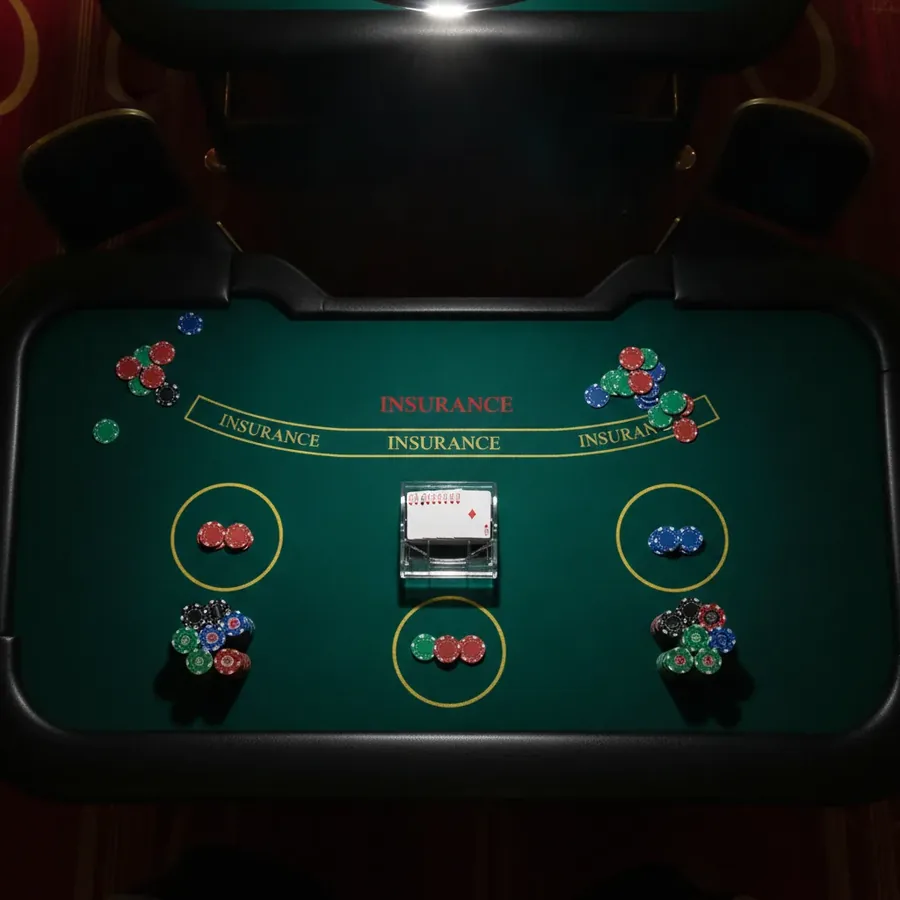
Surrender or Play On With 16 Against a 10
Late surrender on a Blackjack table reduces the house edge by 0.08 percentage points. The player gives up the hand after the dealer has checked for blackjack and loses half the stake, with 50% of the stake returned immediately.
On a 16 against a dealer 10, surrendering removes the hand from play and costs 50 EUR on a 100 EUR stake. Playing out the hand can lose the full 100 EUR, so the surrender option saves 50 EUR in that losing scenario.
Early surrender would be worth up to 0.6 percentage points to the player, but it is extremely rare and not part of the standard 6-deck game described here. The late surrender rule is the realistic modifier to look for at live dealer tables.
Stop the Session After a 30 Percent Loss
A 30% stop on a 100 EUR session bankroll means walking away once the loss reaches 30 EUR. On the 6-deck Blackjack game with a 0.46% house edge, the average cost of play is only 0.46 EUR per 100 EUR staked, so a 30 EUR loss is reached through variance, not the long-run edge.
The 6:5 payout variant carries a house edge of 1.85%, which is 1.39 percentage points worse than the 3:2 game. On a 10 EUR bet a blackjack pays 12 EUR instead of 15 EUR, so the bankroll drains faster and a 30% stop triggers sooner.
Insurance is the worst regular option: a house edge of 7.47% on 6 to 8 decks. A player who takes insurance on a 100 EUR main bet can stake up to 50 EUR on the side bet, and that 50 EUR carries an average loss of about 3.74 EUR per decision, pushing a session toward the stop much faster.
Splitting Eights vs Standing on 16
Splitting eights creates up to four hands, because the split rule allows up to 4 hands. A hand of 16 is the weakest total a player can hold, and splitting eights turns one losing total into two or more starting hands of eight.
Resplitting aces improves the return by 0.08 percentage points, and doubling after a split improves it by about 0.14 percentage points. Those two modifiers together are worth 0.22 percentage points to the player, which cancels out the 0.22 percentage point cost of the dealer hitting soft 17.
Standing on a hard 16 against a dealer 10 keeps the full stake at risk on a total that can only win if the dealer busts. Splitting eights at a table with double after split and resplit aces gives the player two chances to build a stronger total, though split aces usually receive only one card each.
Doubling After a Split: Which Tables Allow It
The 6-deck game with S17 and DAS allows doubling after a split, and the rule improves the RTP by about 0.14 percentage points. A player who splits and then doubles places a stake of twice the original bet on the doubled hand and receives exactly one card.
Blackjack Party from Evolution runs with a bet range of 1.00 to 1,000 EUR, and Lightning Blackjack from Evolution accepts 1 to 2,500 EUR. Both are live dealer tables where the standard doubling and splitting rules can be checked before the first hand is dealt.
Quantum Blackjack Plus Live from Playtech offers a bet range of 1 to 5,000 EUR and Quantum multipliers up to 1,000x on 3-card combinations totalling 21 points. Its RTP of 99.57% assumes optimal strategy, so a player who doubles after split where permitted is working within that optimal framework.
Blackjack variants at a glance
| Variant | Payout | House edge | Rule | RTP |
|---|---|---|---|---|
| Blackjack Insurance (6–8 decks) | Insurance 2:1 | 7.47% | Separate side bet of up to 50% of the main bet when the dealer shows an ace. Basic strategy ALWAYS declines it (except for card counters at a true count ≥ +3). With a single deck the edge is ≈ 5.88% | 92.53% |
| Blackjack 6 decks, S17, DAS, DOA, 3:2 payout, basic strategy | Blackjack 3:2, regular win 1:1, insurance 2:1 | 0.46% | Dealer stands on soft 17; double down on any first two cards; doubling after a split allowed; no surrender. Basic strategy is required to reach this figure | 99.54% |
| Blackjack 6:5 payout instead of 3:2 (6 decks) | Blackjack 6:5, win 1:1 | 1.85% | Replacing 3:2 with 6:5 adds exactly +1.39 percentage points to the casino's edge – more than any other rule change. On a €10 bet a blackjack pays €12 instead of €15. | 98.15% |
| Blackjack Split / double / H17 – rule effects | Double – stake ×2 with one card; split – up to 4 hands; split aces usually get one card each. | H17 +0.22 percentage points; RSA −0.08 percentage points; DAS −0.14 percentage points | Dealer hitting soft 17 lowers RTP by 0.22 percentage points; resplitting aces improves it by 0.08 percentage points; doubling after a split improves it by about 0.14 percentage points; 6 decks instead of 8 – about 0.02 percentage points. | n/a (rule modifiers) |
| Blackjack Surrender (late surrender) – rule effect | 50% of the stake returned | −0.08 percentage points | The player gives up the hand after the dealer has checked for blackjack and loses half the stake. Improves RTP by about 0.08 percentage points. Early surrender is worth much more (up to −0.6 percentage points) but is extremely rare. | n/a (rule modifier) |
| Blackjack Liberal Vegas Strip (liberal rules, 3:2) | Blackjack 3:2, win 1:1 | 0.28% | The most player-friendly rule set: S17 + DAS + resplit + late surrender. Standard deviation 1.15 | 99.72% |
Split Aces: Only One Card per Hand
Splitting aces in Blackjack Single deck, classic rules, 3:2 means the player separates a pair into two starting hands and receives exactly one card on each ace. The rule set shows a return to player of 99.85% with a house edge of 0.15%, the lowest of the three blackjack variants in the comparison. A blackjack pays 3:2, so a winning hand on a €100 stake returns €150 instead of only €120 under a 6:5 payout.
The Liberal Vegas Strip version also limits split aces to one card per hand, but its liberal rules include resplit plus late surrender and dealer standing on soft 17. That combination produces an RTP of 99.72% and a house edge of 0.28%. The resplit aces modifier alone improves the return by 0.08 percentage points according to the rule-effects row, which is a small but measurable gain for the player.
With the 6:5 payout Blackjack on six decks, the same one-card rule applies, yet the return drops to 98.15% and the house edge rises to 1.85%. Replacing 3:2 with 6:5 adds exactly 1.39 percentage points to the casino edge, more than any other rule change listed. A player who splits aces under 6:5 therefore gives up €3 on every €100 blackjack win compared with the single-deck 3:2 table.
Even Money only possible with Dealer Ace
Even money is offered only when the dealer shows an ace and the player holds a blackjack, allowing the hand to be settled at 1:1 before the dealer checks the hole card. On the Blackjack Single deck, classic rules, 3:2 table a natural pays 3:2, so accepting even money on a €100 stake locks in €100 instead of the potential €150 payout. The RTP of that base game is 99.85% with a house edge of 0.15%.
The insurance side bet pays 2:1 and is the mechanism behind even money, but it carries an RTP of only 92.53% and a house edge of 7.47% on six to eight decks. Basic strategy always declines insurance except for card counters at a true count of at least +3. Even money is therefore an insurance decision in disguise, not a separate payout rule, and it lowers the long-run return of the hand.
At the 6:5 payout Blackjack table the dealer ace still triggers the even money offer, but the natural itself pays only €12 on a €10 bet instead of €15. With an RTP of 98.15% and a house edge of 1.85%, the 6:5 game already penalises blackjack before any side bet. Taking even money there converts a poor 6:5 payout into an even weaker 1:1 settlement.
Clicked Too Late? The Hand Stands Automatically
A hand that is clicked too late is automatically held, meaning the player stands on the current total and the dealer proceeds to act. In the Blackjack Single deck, classic rules, 3:2 variant this can cost real value, because the RTP of 99.85% and house edge of 0.15% assume the player follows the correct basic-strategy decision on every hand. Missing a hit or double opportunity pushes the effective return below the theoretical figure.
The Liberal Vegas Strip rules allow doubling after a split and late surrender, which improve the return by 0.14 and 0.08 percentage points respectively. If a hand is auto-held before the player can use those options, those rule advantages are lost for that round. The house edge of 0.28% is only reachable when every decision is made in time, especially on soft totals where standing is rarely correct.
In Quantum Blackjack Plus Live from Playtech the bet range runs from €1 to €5,000 and the game offers quantum multipliers up to 1,000x on three-card 21 combinations. An automatically held hand removes the chance to hit toward a multiplier-qualifying 21, cutting off the highest payout path. The RTP of 99.57% with optimal strategy assumes the player actually executes every optimal action before the timer closes.
Continuous Shuffling Machines Reshuffle After Every Round
A continuous shuffling machine shuffles the discards back into the shoe after each round, so the effective deck composition resets constantly. The Blackjack 6 decks, S17, DAS, DOA, 3:2 payout game has an RTP of 99.54% and a house edge of 0.46% under basic strategy, and that figure assumes a fair shuffle on every deal. With a CSM, card counting becomes impossible because the true count never moves meaningfully.
The single-deck classic rules table shows the strongest RTP at 99.85% and a house edge of 0.15%, with one deck reducing the edge by about 0.48 percentage points compared with eight decks. A continuous shuffling machine removes the very deck-depth effects that make single-deck play mathematically different. The player is left with only the base rule set, which still matters, but no count-based advantage.
Insurance is always declined under basic strategy except for card counters at a true count of +3 or higher, yet a CSM eliminates the count signal needed to make insurance positive. The insurance side bet carries an RTP of 92.53% and a house edge of 7.47% on six to eight decks, so taking it without a verified count simply hands the casino a larger share of each €100 staked.
Place Side Bets Before the Cards Are Dealt
The Blackjack Insurance side bet accepts up to 50% of the main bet when the dealer shows an ace, and must be placed before any further cards are dealt. With 6–8 decks the return to player is 92.53%, which puts the house edge at 7.47%. A player staking 10 EUR on insurance is facing an average loss of 0.75 EUR per decision.
A 2:1 payout sounds attractive, but basic strategy always declines this side bet except for card counters at a true count of +3 or higher. If a single deck is in play the edge drops to about 5.88%, still far above the 0.46% edge on the main Blackjack 6 decks game. Insurance is therefore a separate wager with its own arithmetic, not a protection of the original stake.
A blackjack pays 3:2 on the main bet, so 150 EUR on a 100 EUR stake, while insurance pays only 2:1 on the side bet. Placing that side bet before the cards are dealt converts a strong hand into a long-run cost. The contrast is stark: 99.54% RTP on the main game against 92.53% on insurance with 6–8 decks.
Splitting at a Live Table, Step by Step
A split at the live table follows the rule set of the Blackjack 6 decks game, where doubling after a split is allowed and split aces usually receive one card each. The base game uses S17, DOA and a 3:2 payout, with a house edge of 0.46% under basic strategy. Splitting creates up to four hands from one starting pair, and each new hand requires an additional stake equal to the original.
The rule modifiers show exactly what a split is worth: doubling after a split improves RTP by about 0.14 percentage points, while resplitting aces improves it by 0.08 percentage points. A player who splits a pair of eights against a dealer ten is applying a strategy that reduces the long-run loss compared with standing. The stake doubles with each split hand.
If a 10 EUR hand is split once, the total at risk becomes 20 EUR. With the Blackjack 6 decks edge of 0.46%, that is an average cost of 0.09 EUR across the two hands. The split itself does not guarantee a win, but the rule set at the live table is one of the more favourable arrangements, especially with DAS permitted.
A Side Bet Every Round: The Budget Lasts 30 Rounds
A player who places the Blackjack Insurance side bet every round is committing up to 50% of the main bet each time the dealer shows an ace, which is the only condition under which insurance can be taken. The side bet carries an RTP of 92.53% and a house edge of 7.47% with 6–8 decks. A budget of 150 EUR split into 5 EUR side bets lasts exactly 30 rounds if the dealer shows an ace every round, but that scenario is unrealistic.
The arithmetic is straightforward: 30 rounds at 5 EUR per side bet equals 150 EUR in total side-bet turnover. At a 7.47% house edge, the expected loss on that turnover is 11.21 EUR. If the main bet is 10 EUR and insurance is 5 EUR each time, the total stake per round is 15 EUR, and the same 150 EUR budget lasts only 10 rounds.
The comparison with the main game is decisive. A 150 EUR budget staked entirely on the Blackjack 6 decks main game at a 0.46% edge costs 0.69 EUR on average. The same budget with a 5 EUR insurance side bet every round costs many times more, because the side bet edge is 7.47% rather than 0.46%.
What the Peek Means When the Dealer Shows an Ace
When the dealer shows an ace, the peek is the moment the dealer checks the hole card for blackjack before players act on their hands. Insurance becomes available at this point as a separate side bet of up to 50% of the main bet, paying 2:1 if the dealer has blackjack. With six to eight decks, the insurance bet carries a house edge of 7.47% and an RTP of 92.53%, which makes it the worst regular wager on a blackjack table.
Basic strategy always declines insurance, and only card counters at a true count of at least +3 should consider taking it. The reason is the payout itself: a 3:2 blackjack pays 150 EUR on a 100 EUR stake, while insurance pays 2:1 on a side bet that loses far more often than it wins. With a single deck, the insurance edge drops to about 5.88%, but it still costs players money over hundreds of rounds.
For a practical example, a player who insures a 100 EUR main bet for 50 EUR wins 100 EUR on the insurance when the dealer has blackjack, but loses the main bet of 100 EUR, leaving the hand at net zero. When the dealer does not have blackjack, that 50 EUR side bet is gone, and the main hand still has to beat the dealer. The house edge of 7.47% means every 100 EUR staked on insurance returns only 92.53 EUR on average.
Contact
Live - online chat
Banking









Providers












FairGo Casino 2026